Tulsa Husband Convicted of Killing Mother of Four After Investigators Found Her Body in His Abandoned Car and Evidence He Lived With It
TULSA, OK — A Tulsa man was convicted of first-degree murder in the death of his wife, a mother of four whose body was later found in the trunk of her abandoned car. The case is featured in the season 13 premiere of A&E’s After the First 48, which follows how detectives built the case against Chris Morland after Cassidy Ritchie was reported missing in January 2024.
Authorities said Ritchie’s disappearance quickly became suspicious because Morland’s account kept changing and his reaction to the missing woman did not match what investigators expected from a worried spouse. By the time police found her vehicle along a highway, the search had already turned into a homicide investigation. The episode revisits the steps that led detectives to arrest Morland, charge him with murder and later secure a conviction that carried a life sentence without parole.
Missing mother reported after family had not heard from her for days
Cassidy Ritchie, 39, was reported missing by her mother on Jan. 25, 2024, after relatives had gone several days without seeing or hearing from her, according to Tulsa authorities. Ritchie had four children, and her mother had custody of them, though she still remained in contact with her family.
At the time, Ritchie was trying to rebuild her life. According to After the First 48, she worked as a cashier at a local sandwich shop and had struggled with addiction. She had met Morland while making those efforts, and the two married about seven months later. They were living with roommates in Tulsa when she disappeared.
Police soon focused on Morland because Ritchie’s mother told investigators she believed he had been the last person to see her daughter. That early detail, paired with the timeline of the disappearance, pushed detectives to examine the couple’s relationship and the hours before Ritchie was last known to be safe.
Detectives say Morland kept changing his story about the couple’s argument
Morland told police that he and Ritchie had argued two nights before she was reported missing and that she wanted time away from him. He claimed she drove off in her Chrysler Pacifica, while he insisted he had only the spare key. Investigators later said he had the vehicle’s keys on him, and they confirmed there was only one set.
As questioning continued, Morland shifted his explanation. He first said the dispute happened at their home, then described them driving to a nearby park, and later said the fight was about photos and text messages on Ritchie’s phone. Sgt. Joe Campbell said Morland also appeared to be unconcerned about his wife’s disappearance, a reaction that raised alarm for investigators.
Police also arrested Morland on an outstanding felony warrant from Texas. That arrest did not end the missing-person inquiry, but it gave detectives another opportunity to press him on what had happened and compare his answers against what other witnesses were saying.
Roommates described a controlling marriage and signs of abuse
People who lived with the couple told police that Ritchie’s behavior changed after she married Morland. One roommate said she seemed to be with him constantly and that the pair frequently had loud arguments. Another described Morland as controlling and said he would even go with Ritchie to the restroom, leaving her little privacy.
Investigators also heard that Ritchie may have had a black eye shortly before she vanished, although it was not clear how the injury happened. Det. Max Ryden said those details made it hard to believe she could have simply left alone in her own car. For detectives, the changing story, the key situation and the witnesses’ descriptions all pointed in the same direction.
The investigators’ suspicions were shaped not just by the relationship history but by the way Morland behaved after Ritchie disappeared. The comments from roommates and police officers suggested a pattern of control that detectives believed fit the physical evidence they were starting to collect.
Her car was found wrecked with her body hidden in the trunk
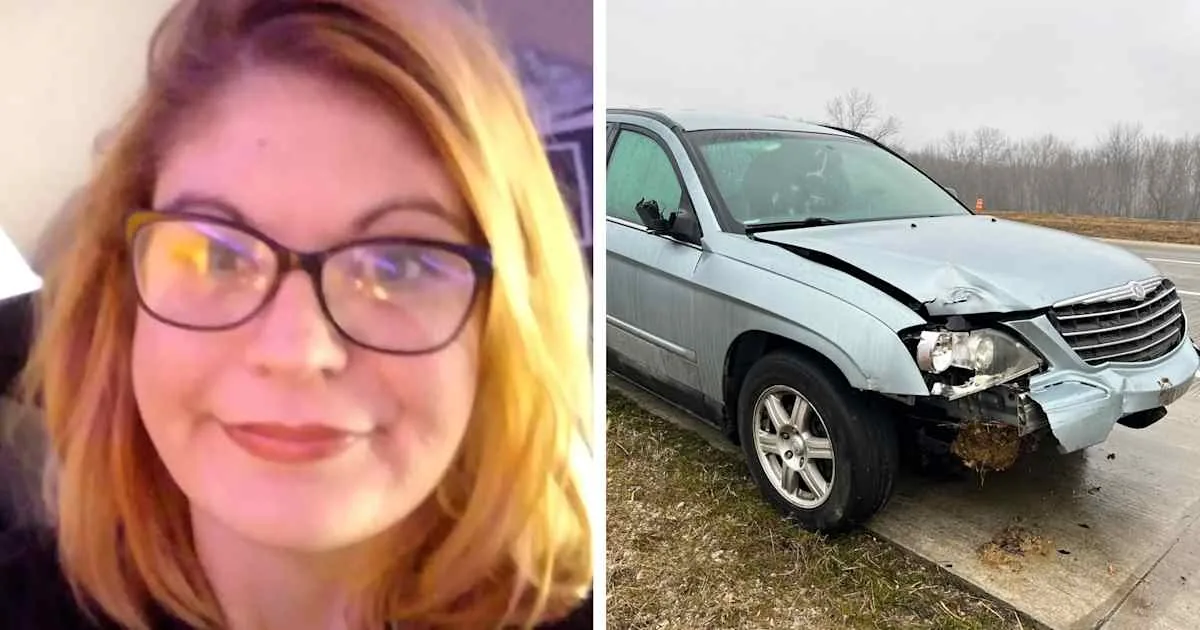
A passerby found Ritchie’s wrecked vehicle on the side of a highway less than 20 miles from her home the day after she was reported missing. Inside, detectives discovered blood stains and, in the trunk, Ritchie’s body wrapped in blankets. That discovery converted a missing-person case into a murder investigation.
An autopsy later showed that Ritchie had been beaten to death and suffered 55 injuries from blunt-force trauma. The medical examiner said she had a broken rib and spleen that caused internal bleeding. Sgt. Joe Campbell said the attack reflected extreme rage, describing it as repeated violence that continued until she stopped breathing.
Police also said there was evidence Morland had been living in the vehicle with Ritchie’s body for days before the car was found. That detail became one of the most disturbing parts of the case and deepened the state’s argument that Morland had tried to hide what he had done.
Murder conviction brought a life sentence as the family sought closure
Morland admitted to police that he hit Ritchie the night she died, saying she stopped breathing and that he “got scared,” according to investigators. His defense attorney argued the killing was a heat-of-passion homicide rather than a planned murder, saying the evidence fit manslaughter instead of first-degree murder.
In October 2025, a jury rejected that argument after a three-day trial and about three hours of deliberation. Morland was convicted of first-degree murder and sentenced to life in prison without the possibility of parole. He is appealing the conviction.
Ritchie’s family said the verdict brought some measure of closure, even though it could not undo the loss. In her victim impact statement, daughter Shelby Ritchie told the court her mother would never see the children grow up, graduate or get married. Her brother, Kyle Ritchie, said learning where she was and bringing her home was the best possible outcome in an otherwise devastating case.