Florida and Texas Prepare Executions of Two Elderly Death Row Inmates After Convictions in Long-Running Murder Cases Spanning Decades
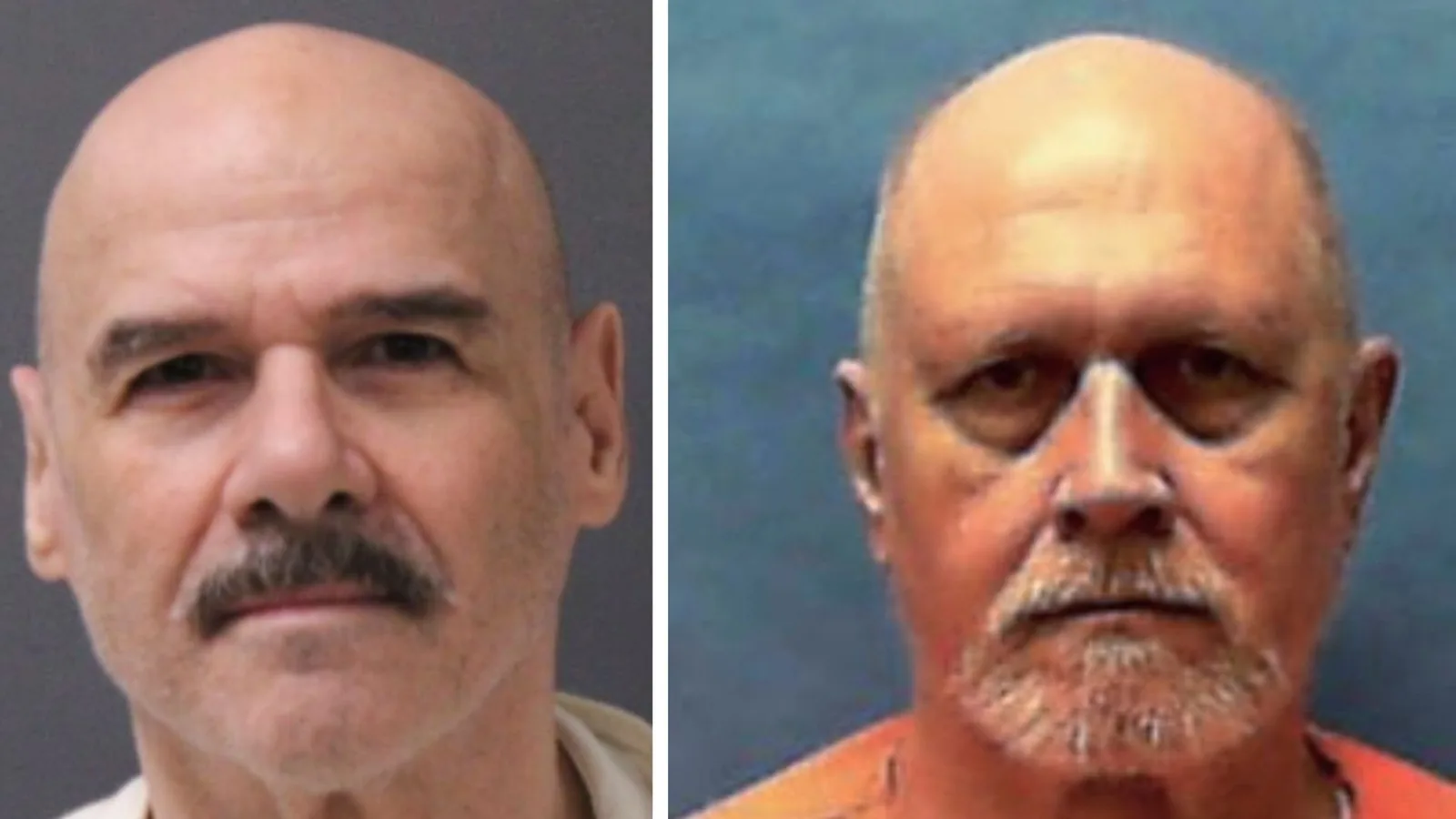
JACKSONVILLE, FL — Florida and Texas are set to carry out executions Thursday in two separate murder cases that have stretched across decades, with both men now in their 70s and their appeals still pending. Thomas Mitchell Overton is scheduled for execution in Florida for the 1991 killings of a pregnant woman and her husband, while Reinaldo Dennes is set to die in Texas for the 1996 killing of a Houston jeweler.
The back-to-back executions would come as Florida reaches a record pace for capital punishment this year and as Texas prepares to add another execution to its 2026 total. The cases also highlight the aging of death row in the United States, where both men were sentenced long ago and are now among the oldest inmates facing execution in the country.
Florida plans a record-setting execution for Thomas Mitchell Overton
Overton, 71, is scheduled to receive a three-drug injection at 6 p.m. at Florida State Prison in Raiford. If carried out, it would be Florida’s 20th execution of the year, a single-year total that would surpass the state’s previous record of 19 executions in 2025.
State records show Overton was convicted in 1999 of two counts of first-degree murder and received death sentences for each killing. Prosecutors said he was responsible for the deaths of Michael and Susan MacIvor and their unborn child during a home invasion in the Florida Keys in August 1991. Defense lawyers have argued that investigators planted DNA evidence, but the courts upheld the conviction.
Gov. Ron DeSantis, who is leaving office in January, has signed the death warrants that pushed Florida to this pace. He has said the executions bring justice to families that have waited for years for sentences to be enforced.
The MacIvor killings and the DNA evidence that linked Overton
According to court records, Michael and Susan MacIvor were found dead in their Tavernier home on Aug. 22, 1991. Autopsies determined that both had been strangled. Susan MacIvor, who was eight months pregnant, had also been raped, and the medical examiner said the unborn boy likely survived for about 30 minutes after her death.
Investigators collected DNA evidence from the scene, but at first they did not find a match in the state’s database. Overton later came under suspicion after being arrested on an unrelated burglary charge in 1996. Authorities said a DNA sample taken from him matched evidence recovered from the MacIvor home, leading to charges in the killings.
Overton had worked at a gas station near the family home, according to the records cited in the case. His attorneys challenged the handling of the evidence, but he was ultimately convicted and sentenced to death.
Texas schedules Reinaldo Dennes in the killing of jeweler Janos Szucs
In Texas, Reinaldo Dennes, 70, is scheduled to receive a lethal injection about an hour after Overton’s execution, making him the ninth person executed by the state this year. He was convicted of capital murder in the death of Janos Szucs, a diamond dealer who was found shot multiple times in his office on Jan. 24, 1996.
Court documents say Dennes had an office in the same building as Szucs. A cleaning woman testified that Dennes arranged for her to open the building’s back door after hours, and that she also distracted the security guard at his request. The guard was shot twice but survived and identified Dennes as the attacker who was disguised during the assault.
Police later found Szucs dead in his office. His safe was empty, and the records said there were no diamonds and no $200,000 in cash that he was expected to have on hand.
The missing diamonds and testimony that tied Dennes to the robbery
The diamonds taken in the robbery have never been recovered, according to the court filings in the case. Prosecutors said the attack was part of a $3.6 million diamond theft that ended in murder, while defense lawyers later argued there was not enough evidence to prove Dennes was the killer.
At trial, the guard’s identification and the cleaning woman’s account became key pieces of the case against Dennes. The prosecution also pointed to a later admission he made in a 2022 Spanish-language interview with Telemundo, where he reportedly said, “I did those things, so I am guilty,” while expressing regret for taking a man’s life.
According to court records, Dennes came to the United States from Cuba as a child with his family. A year after his conviction, his brother, Jose Albert Dennes, pleaded guilty to murder in the same case and was sentenced to 45 years in prison before being released on parole in 2019.
A broader pushback on capital punishment as executions mount
The two executions are set against renewed national attention on capital punishment after Tennessee’s failed execution of Christa Pike in October. Florida’s pace has drawn especially close scrutiny because the state has carried out more than half of the 37 executions in the United States this year.
DeSantis has defended the use of the death penalty as a way to deliver long-delayed justice to victims’ families. His administration oversaw a record 19 Florida executions in 2025, and Thursday’s scheduled execution would move the state beyond that total with two more Florida executions already set for December.
In Texas, Dennes’ case adds another chapter to a state that continues to use capital punishment regularly. Together, the two planned executions underscore how long these cases can remain active, even as defendants age and decades pass between conviction and execution dates.