Florida Man Seeks Overhaul of Police Facial Recognition After False Arrest in Jacksonville Beach Case That Cost Him His Work and Reputation
FORT MYERS, FL — A Florida commercial crabber says a mistaken facial recognition match led police to arrest him at home in Fort Myers, even though the crime he was accused of happened hundreds of miles away in Jacksonville Beach. He says he was told he was wanted in connection with an attempted child luring case tied to a McDonald’s near Jacksonville, a place he had never been.
The arrest happened on Aug. 26, 2024, when he opened the door to an officer and says he was still in flip-flops, a T-shirt and shorts. He says the experience quickly turned from confusion into trauma as he was taken to jail, then moved again before being locked up a second time. He says his first concern was for his 12-year-old daughter, who was nearby in the house.
How the arrest unfolded from a home knock to two jails
According to his account, the arrest began with a knock at the door and a police officer waiting to take him into custody. He says he immediately worried about whether his daughter could hear what was happening and whether she understood why police were there. He also says he had no idea why officers believed he was connected to the case.
He says the arresting process was humiliating and disorienting. After being taken from his home, he says he was placed in an ice-cold jail cell, then in the back of a police van inside a steel cage, and later held in another jail. He says he had no clear understanding of the allegations at the time, only the fear that he would not get back to his wife and daughter.
To secure release, he says he had to put up the title to his truck as bond. By the time he left the police station, he says he was deeply shaken by what had happened and by the distance between his home life in Florida and the accusation tied to Jacksonville Beach.
AI facial recognition pointed police to the wrong man
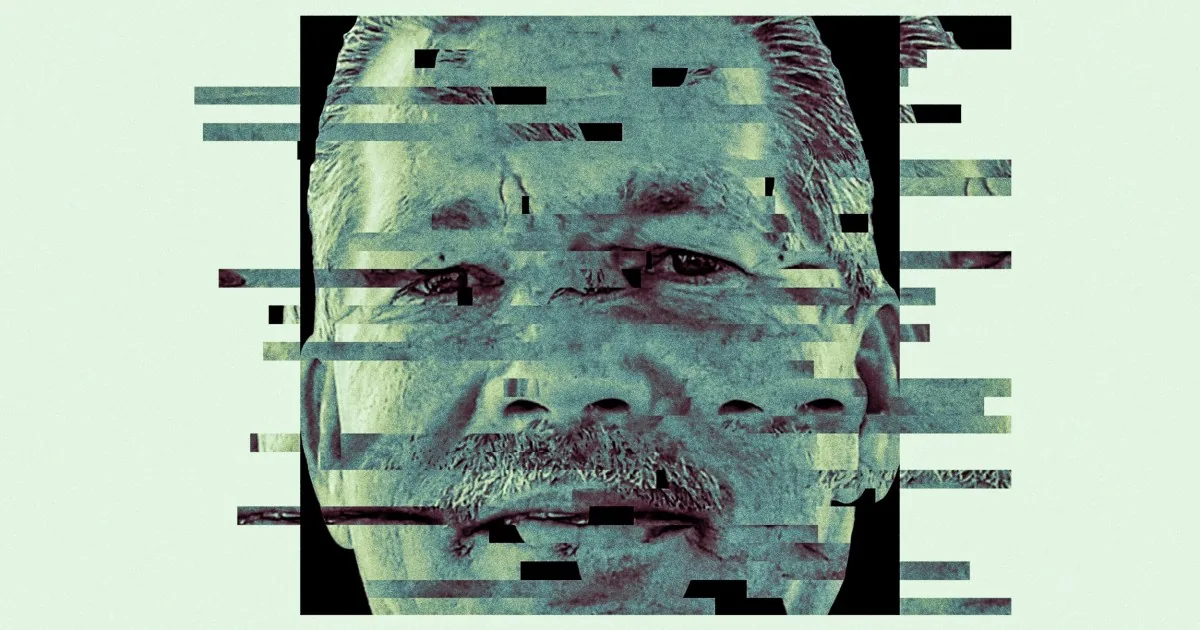
He later learned that investigators with the Jacksonville Sheriff’s Office had uploaded an image from McDonald’s security footage into an artificial intelligence facial recognition system. That system flagged him as a possible match, which helped drive the case forward, according to his account.
He says Jacksonville Beach police then used a photo lineup, but not with the person who had reported being targeted. Instead, the lineup was shown to a McDonald’s employee who was not an eyewitness to the incident. He says that detail mattered because it meant police were not testing the AI result against the person who actually saw the suspect.
The man says the investigation relied too heavily on that technology result and too little on other evidence that pointed away from him. In his telling, officers treated the computer-generated lead as if it were enough to support an arrest, even though he says the facts did not fit him.
He says obvious evidence showed he was not the suspect
The crabber says investigators overlooked several things that should have ruled him out. He points to a prominent scar on his face, saying the suspect in the case did not have one. He also says the employee who picked him out of the lineup described the suspect as a regular customer, while he lives more than five hours away.
He says police also checked his two vehicles through a license plate reader database and found no sign of his car in the county, much less near the McDonald’s. To him, that should have raised serious doubts before an arrest was made.
Instead, he says officers proceeded with the case anyway. He argues that the combination of mistaken technology and ignored evidence caused police to treat him as a suspect even though he believes the available information pointed elsewhere.
The arrest ended one career and made daily life harder
Before the arrest, he says he had built a life around commercial crabbing, a trade he says he first tried as an 8-year-old around the docks in Maryland. Over four decades, he says, he developed a successful career on the water and created a stable family life with his wife, daughter and close friends.
He says that changed once the police publicly posted his mugshot. After that, he says he had trouble leaving the house because he feared people would think he had committed a child sex crime or would see him with his daughter and contact police again.
He says the stigma followed him even around people who knew he had been accused falsely. He describes the experience as one in which he could not shake the worry that others were still wondering whether the accusation might be true.
Charges were dropped but the damage lingered for months
Weeks after the arrest, the Florida state attorney’s office dropped all charges. Even so, he says it took two months to prove his innocence, and his mugshot remained on a police department website for nearly a year.
The financial damage also continued after the case fell apart. He says he fell behind on rent and, when he tried to return to the water, his seafood buyers had already moved on. With the crabbing business weakened, he says he had to leave the ocean work behind and take lawn care jobs to support his family.
He says rebuilding the business has been difficult, but rebuilding trust and credibility has been even harder. The arrest, he says, took away not just income but the reputation he had spent years building.
Lawsuit seeks damages and new rules for police technology
He is now suing the officers, the city of Jacksonville Beach and the Jacksonville Sheriff’s Office. Along with damages, he is asking a court to require the city and sheriff’s office to change how they use facial recognition technology.
His case centers on a broader question about how far police can rely on artificial intelligence before independently checking the evidence. In this instance, he says the technology produced a false lead that should never have become the basis for an arrest.
For him, the goal is not only compensation for what happened but also a policy change that would make it less likely for another person to endure what he says he went through. He says the government’s mistake turned his life upside down and left him trying to recover from a label he never should have carried.