Jet Crash Debris Found Miles From West Palm Beach Scene as Investigators Say Tail Pieces Separated Before the Deadly Impact
WEST PALM BEACH, FL — Pieces of wreckage from the deadly Learjet crash near West Palm Beach have turned up miles from the impact site, including debris that landed inside a woman’s kitchen. Federal investigators say the discoveries are helping them trace what happened in the final moments before the aircraft went down Sunday and killed all nine people aboard.
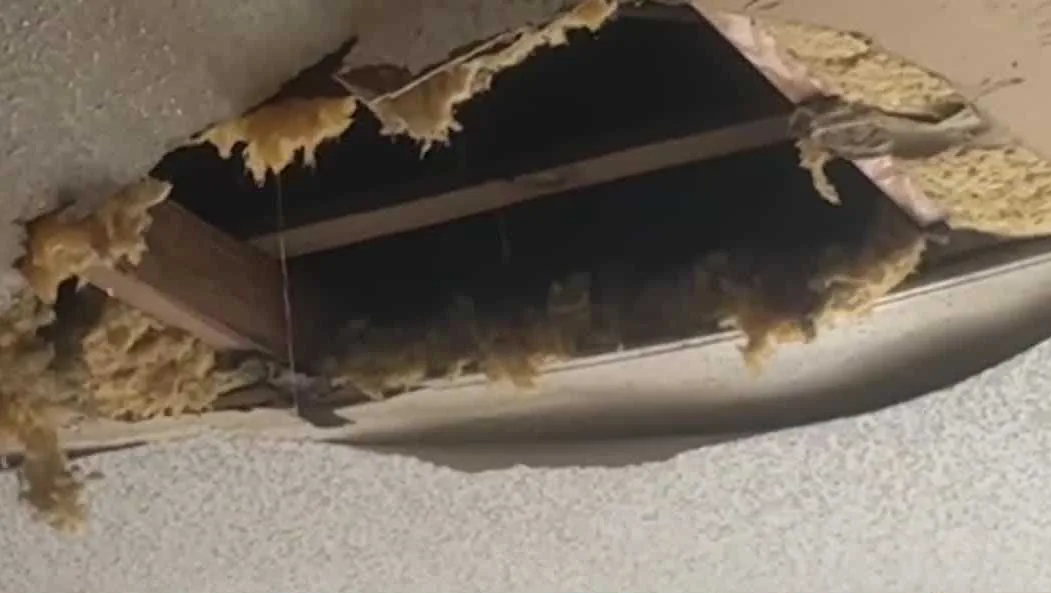
Exclusive photos obtained by WPBF show twisted metal on the kitchen floor of Ana Escobar’s home, less than a mile from where the jet crashed. The Palm Beach County Sheriff’s Office collected the suspected wreckage Tuesday as evidence, while another set of aircraft pieces was found nearly four miles away.
Kitchen debris and other pieces turned up far from the crash site
Escobar said the object tore through her roof before landing in her kitchen. The damaged piece appeared to be part of the aircraft that crashed on a street in West Palm Beach, though investigators have not publicly identified every fragment recovered from surrounding neighborhoods.
Another discovery came from Peter DiMaira, who found what appeared to be parts of the jet’s tail at his workplace 3.8 miles from the crash scene. He contacted the sheriff’s office, adding another location to the growing map of debris tied to the accident.
Officials said the items were found between 1.3 and 3.8 miles from the crash site, underscoring how widely pieces of the aircraft were scattered after impact.
NTSB says critical tail components broke away before impact
The National Transportation Safety Board confirmed Tuesday that investigators recovered three pieces of the jet’s left elevator, a control surface on the tail that helps manage the plane’s pitch, or up-and-down movement. Board member Tom Chapman said the distance those parts traveled shows they separated from the aircraft before it hit the ground.
Investigators still do not know whether the loss of those components caused the crash or whether the crash forces tore them off. Chapman said the missing elevator pieces are an important clue, but not yet a final answer.
He said the function of the elevator is to control pitch, though at the speeds involved he was not sure it would have remained effective even if attached. For now, investigators are treating the pieces as a critical lead in the broader reconstruction of the accident.
Questions remain about whether the damage came before or during the descent
The recovery of tail sections has sharpened the central question facing investigators: did the jet lose control before the elevator pieces broke away, or did the loss of those parts help send it into a deadly descent?
Officials are also examining weather conditions and other possible factors as they work to understand what happened. The NTSB has not said what ultimately caused the crash.
Because the aircraft came down in a populated area, investigators are also relying on nearby evidence, including the location of debris and the sequence of damage, to build a timeline of the flight’s final seconds.
Pilot and copilot identified as recovery work continues
WPBF identified the pilot as Jeff Gregory and said copilot Nathalia Gadelha Filgueiras was also on board. The crash killed all nine people aboard the Learjet, leaving investigators with a wreckage field and scattered debris to examine rather than survivors who could describe what happened.
Road access to the crash area remained blocked Tuesday as NTSB investigators continued to comb through the wreckage. Crews removed a dangerous utility pole near the crater so investigators could get closer to the scene and begin a more detailed search.
Crews plan to drain the crater and search for missing flight data
Investigators planned to start pumping water out of the crater Wednesday so they could search for additional aircraft components buried in the impact area. One of the most important items they hope to find is a cockpit voice recorder, which could reveal what was happening in the cockpit before the crash.
Chapman said maintenance records show a recorder had been installed on the Learjet, but investigators have not yet confirmed whether it remained on board after the crash. If recovered, it could provide crucial context for the aircraft’s final moments.
Investigators are also reviewing dashcam footage and eyewitness accounts as they work to reconstruct the flight. Additional updates are expected as the wreckage is analyzed and the search of the crater continues.