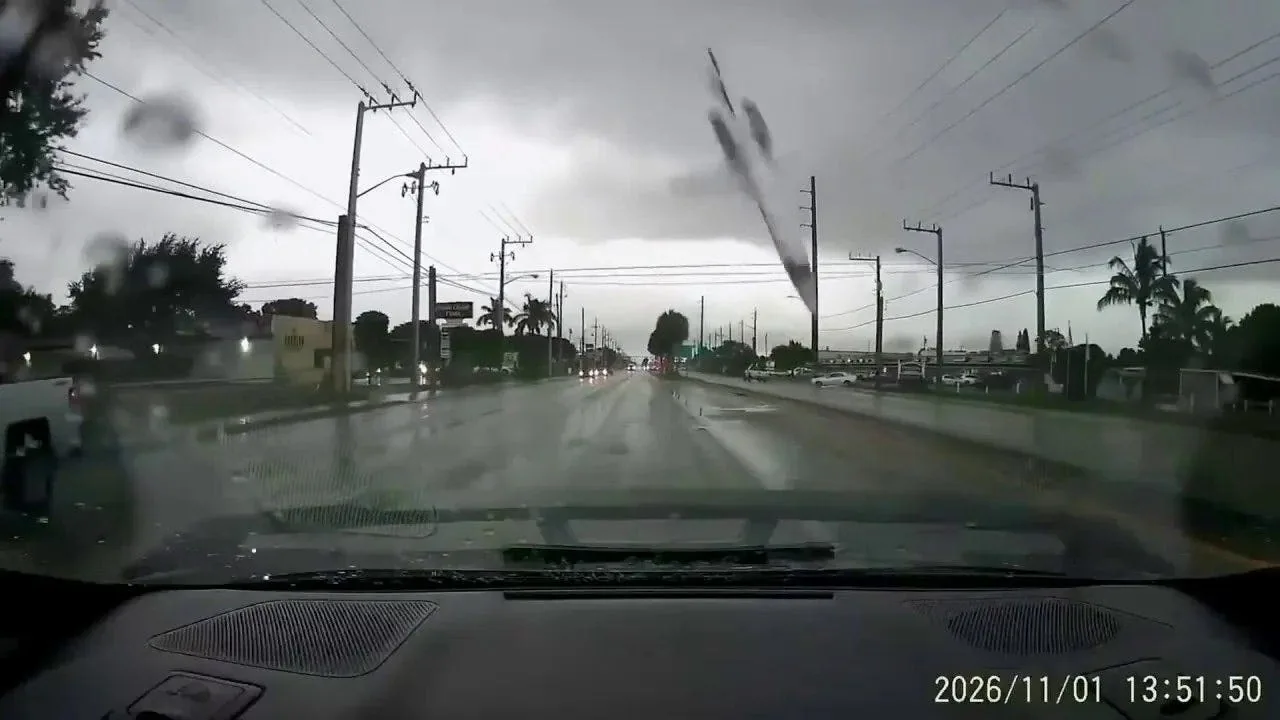
Investigators Say Florida Jet Crash May Have Torn Off Tail Control Piece as Breakup Clues Emerge After Deadly Weekend Wreck
PALM BEACH COUNTY, FL — Federal investigators say a critical tail control surface from the Learjet 60 that crashed in Florida on Sunday was found broken into pieces and scattered miles from the impact site. The discovery has become one of the most important clues in the probe into how the private jet went down shortly before 1 p.m., killing everyone aboard.
The aircraft had departed Austin-Bergstrom International Airport at about 10:37 a.m. and was bound for North Eleuthera Airport in the Bahamas. National Transportation Safety Board member Thomas B. Chapman said investigators recovered the left tail elevator, which helps control the plane’s pitch, and found pieces of it as far as 3.8 miles from the crash site.
Tail elevator debris found miles away from the crash crater
Chapman told reporters Tuesday that the left tail elevator was recovered in three separate pieces. One piece was found about 1.3 miles from the wreckage, while another was located nearly four miles away. Because the fragments were spread out over such a wide area, investigators believe the part likely separated before the jet hit the ground.
That does not yet answer whether the elevator failure caused the crash or whether forces on the aircraft tore it away during the emergency. Investigators plan to study the debris closely to determine whether the jet broke apart in flight or lost the component as part of the final impact sequence. Chapman called the elevator a very important piece of evidence.
Former NTSB investigator sees signs of an in-flight breakup
Former NTSB investigator Greg Feith said the debris pattern points toward an in-flight breakup rather than a single ground impact event. Speaking to Fox News, he said one possible explanation is that a pilot may have tried to level the aircraft and put stress on the structure during the emergency.
Feith pointed to a brief period when the airplane leveled off at about 8,000 feet before the crash. In his view, that could suggest one of the pilots was trying to regain control of the jet, but that the maneuver may have overloaded the aircraft and contributed to parts failing in flight. He also noted that the broken pieces were found close to the main impact area, which he said suggests they came off at low altitude.
Weather has become a major focus of the federal probe
Weather conditions are also a major part of the investigation. Federal investigators said the crew reported icing and moderate turbulence at about 35,000 feet before the aircraft experienced a rapid loss of altitude. That information has made the atmosphere around the flight an important line of inquiry for investigators trying to reconstruct the jet’s final moments.
The NTSB has not said yet how much the weather may have contributed, but the combination of icing, turbulence and a sudden descent gives investigators several factors to weigh. They are expected to compare the aircraft’s flight path, weather data and recovered wreckage as they work to determine whether the crash began with a structural failure, a loss of control or some combination of both.
Recovery crews are trying to reach the crater blocked off on the ground
Investigators also hope to gain access to the crater by Wednesday. The area is currently blocked off and public utility crews are working nearby, which has slowed the examination of the immediate impact site. The crater itself is expected to offer additional clues about how the jet struck the ground and how the debris field formed.
Officials have not said what specific work utility crews are doing, but the restricted access means investigators are still waiting to examine part of the most important scene in the case. That delay has kept the focus on the debris already collected, including the tail elevator fragments that may help show whether the aircraft broke apart before impact or during it.
Nine people died on board including a family from Austin
Nine people were killed in the crash. Among them were Austin tech entrepreneur Adam Robinson, 45, his wife, Helen Sharp, 40, and their children, Emma, 4, and Charlie, 2, according to their families. The children’s nanny, Anita Maria Cetina, was also among those who died.
The other victims identified by family members were Rachael Reed and Charmi Fehr, along with the flight crew, captain Jeff Gregory, 55, and copilot Nathalia Gadelha Filgueiras, 20. The crash has drawn intense attention because of the number of people on board and the fact that investigators are still piecing together what happened in the air before the jet went down.
Cockpit recorder not yet found as investigators sort through unanswered questions
The Learjet was equipped with a cockpit voice recorder, but investigators have not found it and cannot yet confirm that it was on board when the plane crashed, according to NTSB officials. That missing recorder leaves another gap in a case where physical debris is providing many of the first concrete clues.
For now, the investigation is centered on the scattered elevator fragments, the rapid descent, the weather reported by the crew and the possibility of an in-flight breakup. Federal investigators have not drawn a final conclusion, but the recovered wreckage suggests the jet may have been under serious stress before it hit the ground.