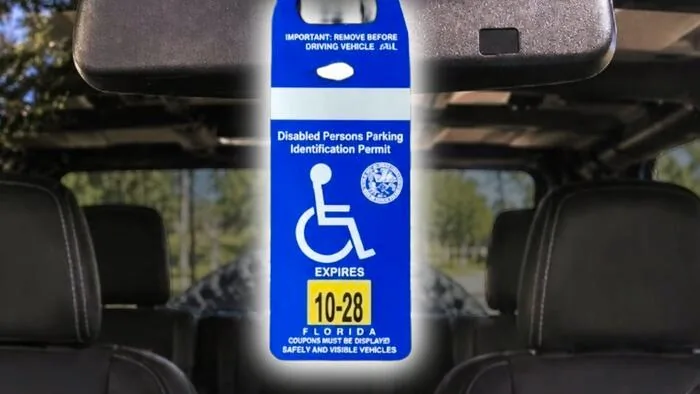
Florida Law Lets Drivers With Disabled Permits Park Free at Public Meters for up to Four Hours, With Limits for Private Lots and Airports
ORLANDO, FL — Drivers with disabled parking permits in Florida can park at public metered spaces without paying, but only for a limited time. Under state law, local governments cannot charge a fee for a public metered parking space when the vehicle displays a disabled parking permit.
The rule is a helpful benefit for people who need closer access to destinations, but it is not a blanket waiver for every parking situation. The free-parking protection lasts for four hours unless a local government has chosen to extend that window.
The four-hour limit matters for street parking
The time limit is one of the most important parts of the law. Once four hours have passed, the vehicle becomes subject to the normal parking rules in that area, unless the local government has created a longer allowance.
That means a disabled permit does not automatically guarantee an entire day of free street parking at a meter. Drivers still need to watch posted limits and local ordinances, because those rules can vary from one city or county to another.
The law is designed to provide convenience and accessibility, but it still preserves local control over how long the benefit lasts. In practice, that makes the permit useful for errands, appointments, and other short trips near metered parking zones.
Private parking lots and garages are not covered
The state law applies to public metered parking spaces, not to every place where a driver might leave a car. Private parking lots and private garages are outside the rule, so a disabled permit does not automatically mean free parking there.
That distinction is important for drivers who assume the permit works everywhere. A private operator can set its own parking policies, pricing, and enforcement rules, so it is worth checking signs before leaving the car.
In other words, the permit may remove a cost at certain public meters, but it does not erase charges in privately run facilities. Anyone with a disabled decal or placard should still look for posted instructions and payment requirements.
Airport parking has separate rules under Florida law
Florida law also sets out special parking rules for airports. Publicly operated airports may still charge for parking vehicles with disabled decals, but there are specific exceptions that require free parking in certain situations.
Those exceptions include vehicles with a license plate for disabled veterans issued under state law. The free-parking requirement also applies to vehicles equipped with specialized disability-related hardware, such as ramps, lifts, or foot or hand controls.
A vehicle displaying a Florida Toll Exemption permit also qualifies for free parking at publicly operated airports. These airport rules are narrower than the general metered-parking provision, which is why drivers should not assume the same benefit applies in every public parking setting.
Why the rule can be easy to misunderstand
The question often comes up because disability parking privileges can differ depending on where someone parks. A permit may open up accessible spaces, but payment rules can still change based on whether the space is metered, private, or located at an airport.
That makes the law easy to misread if drivers hear only part of it. A disabled parking permit does allow free parking at some public meters, but it comes with a time cap and does not override every local or private parking policy.
For drivers, the safest approach is to check the signs at the location first. The permit may help reduce both the walking distance and the cost of parking, but the exact benefit depends on the setting and the rules in force there.
What drivers should remember before leaving the car
Florida’s rules offer real relief for people who need accessible parking, but the details matter. Public meter parking is free for vehicles displaying a disabled permit only for up to four hours, unless a local government allows more time.
Private lots and garages are not included, and airports follow their own requirements. At publicly operated airports, free parking applies in specific cases involving disabled veteran plates, certain adaptive equipment, or a Florida Toll Exemption permit.
For anyone using a disabled decal or placard, the key is to treat the permit as a benefit with boundaries rather than a universal pass. Reading the posted rules can prevent a surprise ticket or an unexpected parking charge.