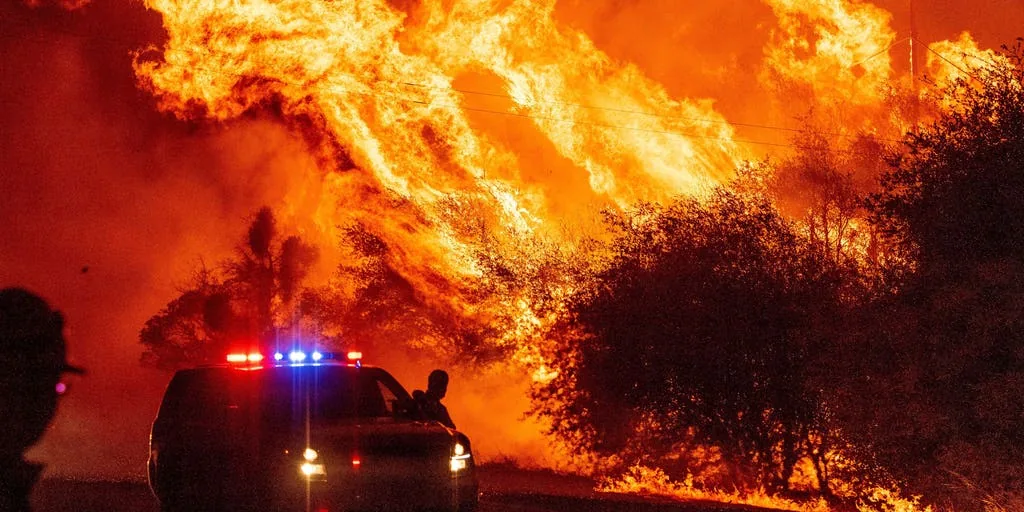
Fire Weather Watches and Warnings Signal Rising Wildfire Danger as Officials Explain How Wind Humidity and Heat Drive Rapid Spread
NEW YORK, NY — Fire weather alerts are designed to warn people when conditions can help a wildfire start and spread quickly. FOX Weather says its forecast guidance uses three levels of concern, while the National Weather Service relies on a watch-and-warning system to show when danger is building or already present.
These alerts matter because wildfire behavior can change fast when dry fuels, gusty winds, low humidity, and warm temperatures line up. Drought can make the risk even worse, leaving vegetation easier to ignite and harder to control once flames begin.
FOX Weather says the goal is to help people understand not only when fire danger is elevated, but also when it becomes critical or extreme. That distinction can shape how residents prepare their homes, limit outdoor burning, and stay alert to local conditions.
How the National Weather Service separates watch and warning levels
The National Weather Service uses two main alerts for fire weather. A Fire Weather Watch means dangerous conditions are possible, while a Red Flag Warning means those conditions are already happening.
FOX Weather refers to Red Flag Warnings as Fire Weather Warnings to make the message clearer for viewers. The underlying idea is the same: weather and fuel conditions have reached a level that can support rapid wildfire growth.
Local weather offices decide when to issue a watch or warning based on criteria for their specific region. The standards in a Plains office can differ from those used in the Southeast because forests, grasses, moisture levels, and fuel types vary from place to place.
FOX Weather's three levels of fire weather concern
FOX Weather uses three tiers to describe wildfire risk in its forecasts. Elevated Fire Weather means dry fuel, gusty winds, and low relative humidity are expected for at least three hours.
Critical Fire Weather raises the stakes further. That level calls for sustained winds of at least 20 mph, low humidity, and temperatures above 50 degrees for at least three hours.
The highest level is Extreme Fire Weather. FOX Weather uses that category when sustained winds reach at least 30 mph, humidity stays low, and temperatures are above 60 degrees for at least three hours.
The three-hour benchmark is important because it signals a long enough window for a fire to grow fast if one starts. In practice, that means the weather is not just briefly favorable for flames, but favorable for a sustained and potentially dangerous spread.
Why dry wind and low humidity make fires spread faster
Fire weather is a broad term for conditions that allow flames to move quickly across an area. The combination of low humidity, dry fuels, gusty winds, and warm temperatures creates a setting where a spark can become a larger fire in a short time.
Low humidity dries out grasses, brush, and other fuel sources. Wind then pushes flames and carries embers, which can ignite new spots ahead of the main fire front.
Warm weather adds another layer of risk by helping dry out vegetation even more. When those factors overlap, fire crews and emergency managers often prepare for faster growth and more difficult suppression efforts.
Lightning human activity and dry conditions can all start wildfires
Wildfires are commonly sparked by lightning or by people. The National Weather Service notes that fires can even begin during severe thunderstorms, including times when it is raining.
Dry lightning is a particularly important hazard because storms can bring lightning with little or no rainfall. That means a strike can ignite vegetation without enough moisture to slow the fire down.
Human activity is the leading cause of wildfires in the United States. The National Interagency Fire Center says 85 percent of U.S. wildfires are caused by people, with common sources including open burning, hot vehicle exhaust, dragging chains, unattended or poorly extinguished campfires, downed power lines, fireworks, and arson.
What homeowners can take from a fire weather forecast
Fire weather alerts are not just for firefighters and meteorologists. They are also a signal for homeowners to reduce avoidable risks around their property and to stay aware of changing conditions in their area.
Because strong wind and dry fuel can turn a small ignition into a fast-moving fire, even routine activities can become hazardous during elevated fire weather. Outdoor burning, equipment use, and travel near dry roadside vegetation can all carry more risk when conditions are severe.
FOX Weather’s three-tier system is meant to make that risk easier to understand at a glance. By pairing those categories with the National Weather Service alerts, forecasters are giving the public a clearer picture of when the atmosphere is merely favorable for fire and when it is already dangerous.